
What Does a Hawthorn Tree Look Like: Identification Guide
Ever been out for a walk and seen a tree with pretty white flowers in spring or bright red berries in the fall, but couldn’t quite place it? Chances are, you might have walked right past a hawthorn tree without even knowing it. These trees are pretty common, popping up in parks, along roadsides, and in wilder areas. Learning what a hawthorn tree looks like is actually pretty straightforward once you know a few key features. This guide will help you spot them, no matter the season. In this article, we will discuss what does a hawthorn tree look like in a detailed way.
What Does a Hawthorn Tree Look Like in Different Landscapes?
Hawthorn trees are pretty adaptable, and you can find them popping up in all sorts of places. They’re not picky about where they grow, which is why they’re so common. You’ll often see them along the edges of fields, in hedgerows, or even out in rocky, open areas. They seem to do well whether it’s a rural setting or closer to towns.
These trees generally prefer a good amount of sun, though they can handle a bit of shade. As for soil, they’re not too fussy, but they do like it to drain well. Even thin or rocky ground is usually fine, as long as there’s enough light. Their tough nature and strong roots mean they can hang on in places that might not be ideal for other trees, like dry spots or areas with poor soil. It’s pretty amazing how they can thrive with minimal fuss.
The hawthorn’s ability to grow in various conditions and provide a home and food for wildlife makes it a really important part of many ecosystems.
Because they can grow in so many different environments, you might see them looking a bit different depending on their surroundings. For instance, in a tight hedgerow, a hawthorn might spread out with multiple stems, looking more like a dense bush. But if it has more space, like in an open field or garden, it’s more likely to grow into a small tree with a single, clear trunk. This flexibility means you might need to look at more than just the shape to be sure it’s a hawthorn. For example, Russian hawthorn is known for its structure in dry areas. Regardless of its form, the basic features like the leaves, flowers, and thorns are usually consistent.
Overall Shape and Size: What Does a Hawthorn Tree Look Like at Maturity?
When you look at Hawthorn, and your mind thinks about what does a hawthorn tree look like?And it is the most common and obvious question. When a hawthorn tree hits its stride, it’s usually a pretty sturdy, medium-sized specimen. Most mature hawthorns stand between 15 to 30 feet tall, though some can get a bit bigger. They often develop a rounded crown, kind of like a fluffy cloud, but it can also be a bit more flat-topped. You’ll notice they tend to be quite dense, with branches that spread out. It’s not uncommon for them to have a single, clear trunk, especially if they’ve been grown in an open area. However, if they’re squeezed in a hedgerow or left to their own devices, they can get a bit bushier with multiple stems coming from the base.
Think of it this way:
- Tree Form: Usually a single trunk, more upright growth, and a rounded or somewhat flat crown. This is what you’d typically see if it’s planted as a standalone feature.
- Shrub Form: Multiple stems from the ground, wider and denser, often shorter. This happens when they’re growing in tighter spaces or are regularly pruned to stay bushy.
These trees are pretty tough and can handle a variety of conditions. They’re not picky about soil as long as it drains okay, and they like a good amount of sun. This hardiness means they can grow into a substantial size without too much fuss. You can often spot a hawthorn by its thorny branches, which are a pretty consistent feature no matter the size or shape it takes. It’s a tree that really makes its presence known in the landscape.
Hawthorns are known for their thorny nature, which can be quite a deterrent for some animals and people. These thorns are sharp and can grow quite long, making them a natural defense for the tree. They emerge from the same point as the buds, which is a helpful detail for identification, especially when comparing them to similar plants like blackthorn.
It’s worth noting that hawthorns can sometimes hybridize with other hawthorn species, which can lead to slight variations in their overall appearance. So, while there are general characteristics, you might see some subtle differences from one tree to another. If you’re trying to identify a specific hawthorn, checking out its leaf shape can be a good next step.
Leaves and Foliage Details: What Does a Hawthorn Tree Look Like Up Close?
When you get a good look at a hawthorn tree, the leaves are one of the first things that really stand out. Most of the time, they’re pretty small, usually less than an inch or two long, and have a shape that’s kind of oval or egg-like. They’ve got these edges that look like they’ve been cut with tiny saw teeth, which is a common feature. Some hawthorn species have leaves that are also a bit lobed, meaning they have shallow indentations that can make them look a bit like a mitten or a tiny hand.
These leaves grow on short, thin stems, and they’re arranged one after another along the branch, not directly opposite each other. When they’re brand new in the spring, they can feel a little fuzzy or hairy. As the season goes on, they become smoother. The arrangement and shape can vary a bit depending on the exact type of hawthorn, but that toothed edge is a pretty reliable sign.
The leaves are typically green, but their appearance can change quite a bit as the year progresses, especially when autumn rolls around.
Here’s a quick rundown of what to expect with hawthorn leaves:
- Shape: Generally ovate to elliptical, often with shallow lobes.
- Edges: Most commonly have a serrated or saw-toothed margin.
- Texture: Can be hairy when young, becoming smoother with age.
- Arrangement: Alternate along the stem.
The most distinctive feature of hawthorn leaves is their combination of a toothed edge and often a lobed appearance, making them look somewhat like tiny, green mittens. They’re not usually large or dramatic, but they’re quite characteristic once you know what to look for.
Flowers and Blooming Season: What Does a Hawthorn Tree Look Like in Spring?
Spring is a really special time for hawthorn trees because that’s when they put on their floral show. You’ll notice clusters of small, usually white flowers appearing on the branches. These blooms are pretty distinctive – they typically have five petals and can sometimes have a faint, sweet smell. It’s this burst of white that gives the hawthorn its common name, ‘May tree’ or ‘May flower,’ because they often bloom right around May in many places.
The appearance of these flowers is a dead giveaway for identifying a hawthorn in the spring.
Here’s a quick rundown of what to expect:
- Color: Predominantly white, though some varieties or cultivated types might show hints of pink.
- Petals: Each flower usually has five rounded petals.
- Arrangement: They don’t just pop out one by one; they grow in dense clusters, making the whole tree look frothy and bright.
- Timing: Generally, you’ll see them from late spring into early summer, depending on your local climate.
Seeing these delicate white blossoms dotting the landscape is a sure sign that warmer weather is here and that the hawthorn is getting ready for its next stage of growth. It’s a beautiful, albeit brief, transformation from bare branches to a flowering spectacle.
While the flowers are lovely, they don’t last forever. They’re a fleeting but important part of the hawthorn’s annual cycle, signaling new life and setting the stage for the fruits that will develop later in the year.
Fruit Appearance: What Does a Hawthorn Tree Look Like When Fruiting?
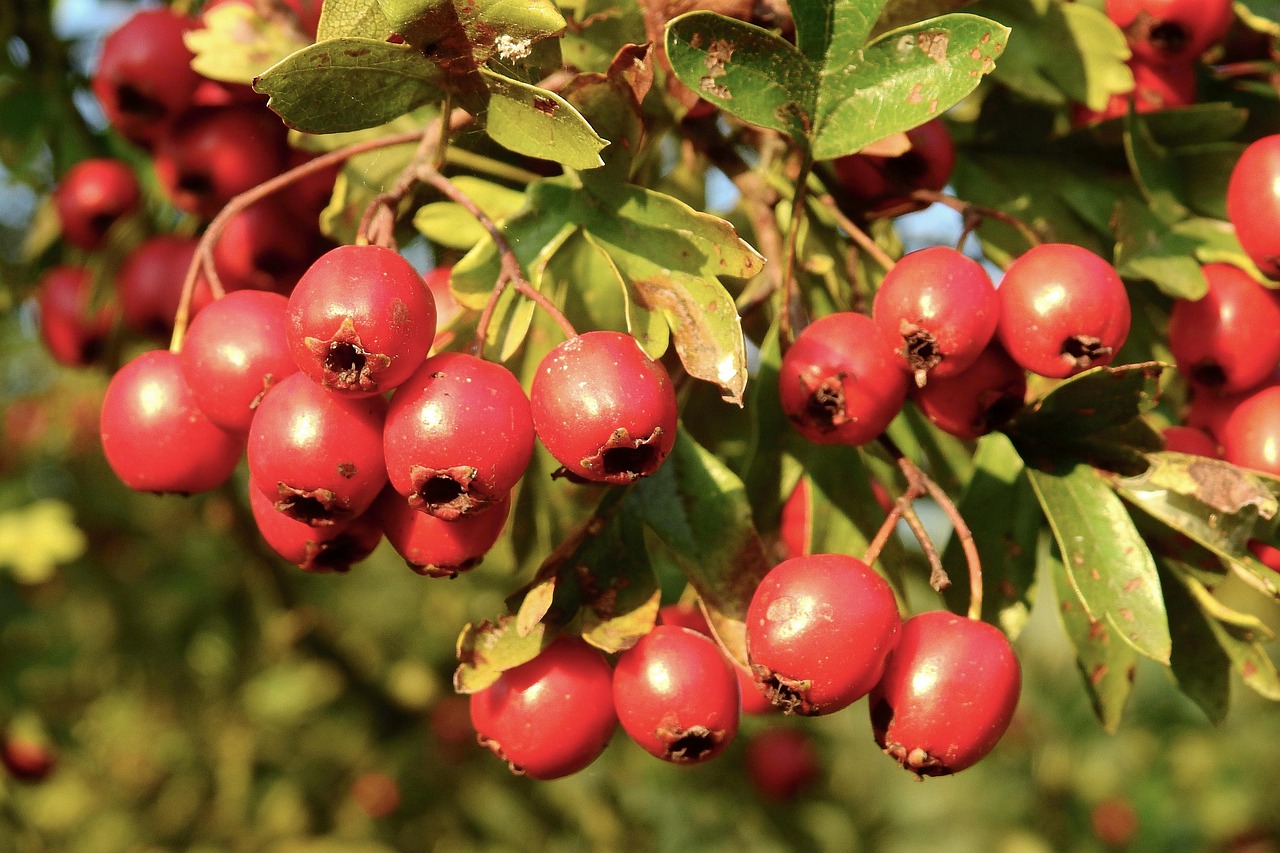
Once the hawthorn tree finishes its spring bloom, it starts to produce fruit, often called “haws.” These little guys are usually ready to be seen in late summer or early autumn, and they can stick around well into the winter months.
The fruit typically appears as small, round, berry-like structures, most commonly in a vibrant red color. They grow in clusters, much like the flowers did, and you’ll often notice that the five little lobes from the flower’s calyx are still attached to the tip of each fruit. It’s a neat little detail that helps confirm you’re looking at a hawthorn.
Each haw isn’t a true berry, though. Inside, you’ll find one to five “nutlets,” and each of those contains a single seed. These nutlets are usually clustered together in the center, giving the fruit a slightly stony feel. The texture of the flesh around the nutlets can be a bit dry and mealy, not exactly juicy like a typical berry you’d find at the grocery store.
Here’s a quick rundown of what to expect from hawthorn fruit:
- Color: Predominantly red, though some species might have darker hues.
- Size: Generally small, usually less than an inch wide.
- Shape: Round or slightly oval.
- Arrangement: Grow in clusters.
- Persistence: Often remain on the branches through fall and into winter.
While the fruit is edible for humans, it’s not exactly a gourmet experience for most. The taste can be a bit tart, and the texture is often described as mealy. However, these fruits are a really important food source for many birds and other wildlife, especially during the colder months when other food sources are scarce. So, even if you’re not planning on snacking on them, they play a big role in the ecosystem.
Different hawthorn species can have slight variations in their fruit. For instance, the Common Hawthorn (Crataegus monogyna) typically has fruit with just one seed (or one nutlet), while the Midland Hawthorn (Crataegus laevigata) often has fruit with two seeds. It’s these subtle differences that can sometimes help distinguish between closely related species.
Bark and Branch Structure: What Does a Hawthorn Tree Look Like Throughout the Year?
Hawthorn trees have a pretty distinctive look when it comes to their bark and branches, and these features stick around all year, which is super helpful for identification.
Younger trees and twigs usually have smooth, gray, or brownish bark. But as the tree gets older, that bark starts to change. It becomes rougher, developing scales or narrow ridges that run up and down. You might even see some fissures, which are like little cracks. If you ever peel back the bark, you might notice a foxy reddish-brown color on the inner wood. Sometimes, you can even spot little oozy bits on the branches, which is kind of interesting.
The branches themselves are also a giveaway. They’re typically slender and tend to zig-zag a bit. And, of course, there are the thorns. These aren’t just little nubs; they’re usually long, thin, and quite sharp. They can grow up to an inch long and are a pretty consistent feature, even when the tree has no leaves.
Here’s a quick rundown of what to expect:
- Young Bark: Smooth, gray to brown.
- Mature Bark: Becomes rough, scaly, or develops fissures and ridges.
- Twigs: Slender, often with a zig-zag pattern.
- Thorns: Prominent, sharp, and can be up to an inch long, growing along the branches.
The bark and thorny branches are reliable identifiers for hawthorn, especially during the winter months when other features like leaves and flowers are absent. These sturdy structures help the tree withstand various weather conditions and deter herbivores. You can often find hawthorn trees in hedgerows and along field edges.
These characteristics, especially the persistent thorns and the texture of the bark, make hawthorn trees recognizable even when they’re bare in the winter. It’s a tough, resilient tree, and its bark and branch structure really show that.
Seasonal Changes: What Does a Hawthorn Tree Look Like in Fall and Winter?
As the seasons shift, the hawthorn tree undergoes a noticeable transformation, offering different clues for identification. Come fall, the tree really shows off its fruit, often called ‘haws.’ These are small, round berries that typically turn a bright red. They’re quite striking against the fading green leaves and can stick around even after the leaves drop, making them a good winter identifier.
By the time winter arrives, the hawthorn is stripped bare of its leaves, but its structure becomes more apparent. You can clearly see the thorny branches, which are a key feature. The bark, usually gray or brown, might look rougher or even a bit cracked on older trees. It’s these persistent thorns and the red haws, if they’re still hanging on, that help distinguish it from other trees when everything else is dormant.
Here’s a quick rundown of what to look for:
- Fall: Bright red fruits (haws) appear, often remaining after leaves drop. Leaves might show some color change before falling.
- Winter: Bare branches with prominent, sharp thorns. The red haws may still be visible.
- Bark: Gray to brown, becoming rougher and possibly fissured with age.
The starkness of winter can actually make some hawthorn features stand out more. The sharp thorns, which might get lost among the foliage in summer, are quite obvious on bare branches. This is a good time to check for their presence and note their length and sharpness, which can help differentiate them from similar-looking trees like blackthorn.
It’s interesting how much the tree changes. You go from seeing those lovely white flowers in spring to a tree covered in red berries in the fall, and then to a stark, thorny silhouette in winter. Each stage has its own way of saying, “Yep, that’s a hawthorn!”
Field Identification Tips: What Does a Hawthorn Tree Look Like in the Wild?
Spotting a hawthorn tree out in the wild is pretty satisfying once you know the tricks. It’s not just about seeing a tree; it’s about recognizing this tree. You’ll start seeing them everywhere once you know the signs.
The most reliable hawthorn tree identification comes from looking at a combination of features, not just one. Think of it like putting together a puzzle. You need several pieces to see the whole picture.
Here’s a quick rundown of what to keep an eye out for:
- Thorns: These are a big clue. They’re sharp and usually found on the branches. They can be a good inch long, so be careful if you’re getting up close. They tend to grow from the same spot as the buds, which is a helpful way to tell it apart from blackthorn, which has buds on its spines.
- Leaves: They’re small and have a distinct shape, often described as lobed or looking a bit like a mitten or a hand. The edges are usually toothed.
- Flowers: In spring, look for clusters of small, white flowers. They typically have five petals. This is a prime time for hawthorn spotting.
- Fruit (Haws): After the flowers fade, you’ll see small, bright red fruits. These are called haws and often stick around well into the winter, providing a splash of color.
- Bark: It’s usually gray or brown and has a rough texture. Older trees might have bark that looks a bit cracked or flaky.
When you’re out in the countryside, especially near hedgerows or along field edges, keep these features in mind. It’s easy to mistake hawthorn for other trees, but focusing on these specific details will help you nail the hawthorn tree identification.
Don’t just rely on seeing it once. If you can, check back in different seasons. Seeing the white flowers in spring and then the red berries in the fall really seals the deal. It’s a bit like getting to know a person – you learn more about them over time, and the same goes for trees.
So, You’ve Met a Hawthorn!
Alright, so now you know the deal with hawthorn trees. They’re pretty common, and once you get the hang of spotting their thorny branches, hand-shaped leaves, white spring flowers, and those little red berries, you’ll start seeing them everywhere. Whether it’s in a hedge, a park, or just along the side of the road, this tree has a lot going on. It’s not just a pretty face; it’s a busy little hub for birds and bees, too. Keep an eye out for those key features, and you’ll be identifying hawthorns like a pro in no time. Happy tree spotting!
Frequently Asked Questions
What are the main things to look for when identifying a hawthorn tree?
To identify a hawthorn tree, look for its small, lobed leaves that often resemble mittens. You’ll also notice sharp thorns on its branches. In spring, it has clusters of white flowers, and in the fall, it produces small red fruits called haws. The bark is typically gray-brown and a bit rough.
When is the best time of year to see hawthorn flowers?
The best time to see hawthorn flowers is in the spring, usually around May. This is when the tree is covered in small, white, five-petaled flowers that sometimes have a light scent. This blooming period has earned it the nickname ‘May tree’.
What do hawthorn fruits look like, and when do they appear?
Hawthorn fruits, often called ‘haws,’ are small, round, and bright red, resembling tiny berries. They appear in the fall after the flowers have faded and often stay on the branches throughout the winter, providing a splash of color.
Are hawthorn trees thorny? How sharp are the thorns?
Yes, hawthorn trees are known for their sharp thorns, which grow along the branches. These thorns can be up to an inch long and are quite noticeable. They serve as a key identification feature, though it’s wise to be careful when handling the branches.
Can a hawthorn tree be mistaken for other trees? What are the differences?
Yes, hawthorn can sometimes be confused with trees like blackthorn or crab apple. Key differences include hawthorn’s lobed leaves and red fruit, blackthorn’s earlier flowers and blue fruit (sloes), and crab apple’s rounded leaves and small apple-like fruit. Hawthorn also has thorns, while crab apple does not.
Where do hawthorn trees typically grow?
Hawthorn trees are quite common and can be found in various places. They often grow in hedgerows, along the edges of fields, in woodlands, and in open, somewhat rocky areas. They are native to Europe and parts of Asia and have also spread to North America.
Request a Quote
Our Services


